Lanjut EcoVillages * Malaysia

Lanjut EcoVillages ... Put very simply, the idea of an "EcoVillage“
is a Community whose Members try to provide a high quality lifestyle without taking more from the Earth than they give back!


Thursday, March 14, 2013

World’s top beaches - Holiday - New Straits Times

World’s top beaches - Holiday - New Straits Times:


World’s top beaches


IT’S time to hit the beach. If only the best beach can satisfy your craving for some sun, sand and sea, take a look at the lists of best beaches in the world.

Travel portal TripAdvisor released the lists when it announced the winners of its 2013 Traveller’s Choice Beaches Awards.
Based entirely on feedback from millions of TripAdvisor travellers, 276 winning beaches from all around the world have been named, with highlights on favourite beaches in Africa, Asia, Caribbean, Central America, Europe, Middle East, the US and more.
“For those considering a weekend escapade by the sea, take inspiration from TripAdvisor travellers who have visited these beaches and given them the highest levels of praise,” said chief marketing officer Barbara Messing.
Top 10 Beaches In Asia
1.  White Beach, Boracay, Visayas,
Philippines
2.  Agonda Beach, Goa, India
3.  Railay Beach, Krabi, Thailand
4.  Radhanagar Beach, Andaman & Nicobar Islands, India
5.  Phra Nang Beach, Krabi, Thailand
6. Nai Harn Beach, Phuket, Thailand
7.  Cavelossim Beach, Goa, India
8. Otres Beach, Sihanoukville, Cambodia
9. Secret Lagoon Beach, Mimaropa, Philippines
10. Yapak Beach, Boracay, Visayas, Philippines
Top 10 Beaches In The World

1. Rabbit Beach, Lampedusa, Italy
2. Grace Bay, Providenciales, Turks and Caicos
3. Whitehaven Beach, Airlie Beach, Australia
4. Baia do Sancho, Fernando de Noronha, Brazil
5. Flamenco Beach, Culebra, Puerto Rico
6. Playa de las Catedrales, Ribadeo, Spain
7. Lopes Mendes Beach, Ilha Grande, Brazil
8. Horseshoe Bay Beach, Southampton Parish, Bermuda
9. Eagle Beach, Aruba
10. Rhossili Bay, Swansea, Wales

White Beach, Boracay, Visayas, Philippines


Whitehaven Beach, Airlie Beach, Australia


Rabbit Beach, Lampedusa, Italy

Read more: World’s top beaches - Holiday - New Straits Times http://www.nst.com.my/life-times/holiday/world-s-top-beaches-1.234186#ixzz2NXVw2XRF


Why is Green Development So Important?


Why is Green Development So Important?

The environmental problems which face us today have now grown to the point that they affect our very quality of life. There is increasing demand for a limited supply of natural resources used in the industry.
Building Industry Responsibilities
Public and private interests must work together and begin to redesign the built environment. The entire building industry—including owners, design professionals, facility managers, construction workers and technicians—can and should contribute to this effort. A 1995 report by the prestigious environmental research organization, the Worldwatch Institute, begins to quantify the tremendous effect that buildings have on the environment.

Buildings account for:
one-sixth of the world’s fresh water withdrawals 
one-quarter of the world’s wood harvest 
two-fifths of the world’s material and energy flows 

Side effects from this massive resource use include deforestation, air and water pollution, stratospheric ozone depletion, and the risk of global warming. Unlike pollution from cars and factories, which have been the subject of public battles in many parts of the world, the harm caused by buildings has largely escaped scrutiny. This is ironic, since there are now cost effective ways to lessen the negative environmental impact of new and retrofitted buildings. If people were only more aware of these facts, we could preserve the security, comfort, and amenities that people expect from modern buildings without injuring the environment as much.

Building Industry Opportunities

While the construction and operation of buildings take a great toll on the earth, there are already many practical, cost effective ways to improve the environmental and technological performance of buildings while enhancing functionality, comfort and aesthetics. If we can embrace a conservative ethic that advocates the efficient use of natural resources and seeks to eliminate waste and pollution, we will be making a valuable contribution toward our future.

Green buildings take into account the full life-cycle of building materials. From the acquisition of natural resources, product manufacture and construction, installation and use, to their ultimate salvage or reuse, environmental impacts are minimized at every stage.

Significant long-term financial benefits can be gained due to increased building durability, lower maintenance and energy costs, and greater efficiency. In addition, many U.S. utility companies are willing to help defray the incremental costs of high efficiency motors, equipment, lighting and glazing, by offering cash rebates to encourage use of these energy efficient strategies.

Where productivity is figured into life cycle cost accounting, building green becomes even more compelling: see enclosed article "The Economics of Environmentally Responsible Buildings", by Barry H. Dimson, President of EcoSmart Healthy Properties, LLC.

This data suggests that if a building owner takes into account the quality of life of a building’s occupants, the total life cycle costs can be substantially reduced due to better morale, less absenteeism, and increased productivity and creativity.

Evidence indicates that green design is the right thing to do for the environment and the bottom line. Organizations and corporations can benefit by committing to environmental policies. By displaying environmental leadership they will attract trade and public support for their company, products, and technological services.


10 Simple Things You Can Do - Architecture

1. Establish an Energy Budget
An energy budget accounts for all energy use for heating, cooling, lighting, fans and motors, and plug loads per gross square foot per year and is generally expressed in BTU/SF/YR. Work with an energy model (use Doe-2, Blast, Trane, or Trace) from the beginning of conceptual design to develop your program and site specific energy budget, and then to test design options. A good minimum goal is to improve upon ASHRAE 90.1-1989 by 30%, but you may be able to do much better.

2. Optimize the Design of the Building Envelope
First consider building orientation, sunshading, thermal mass and the color and reflectivity of walls and roof surfaces. Then develop optimal design criteria for insulation and windows. Do not rely on code minimums. Maximize the use of natural light using a holistic approach that addresses artificial light and heat gain. Use daylighting models to ensure that lighting is effective.

3. Use High Efficiency Standards for Electric Lighting
Use of high efficiency lamps and ballasts, task lighting, reduced ambient lighting and smart controls such as occupancy sensors and daylight dimming can dramatically reduce energy usage associated with electric lighting. California Title 24, a good minimum standard for electric lighting, establishes limits for w/sf, requires dual level switching and establishes zones for lighting controls in daylit areas.

4. Design for Good Indoor Air Quality
Use ASHRAE 62-1989 as a design guideline for Indoor Air Quality. ASHRAE 62-1989 addresses issues such as minimum ventilation rates, documentation of HVAC design decisions and building systems. Evaluate ambient air quality at the fresh air intake, and carefully locate intake and exhaust air locations to avoid contamination of the building’s fresh air supply.

5. Use Water Efficient Plumbing Fixtures
Follow the low-flow fixture requirements of the Energy Policy Act of 1992 at a minimum. Use self-closing or electronic faucets for lavatories.

6. Investigate Building Materials
Compare the environmental impacts of material options throughout their life cycles, from raw materials; production process; packaging and shipping; installation and use; and disposal or reuse. Investigate associated materials for installation, finishing, and maintenance. Select preferred products and require environmental improvements in the specification (include low VOC requirements, minimum recycled content, avoidance of toxic materials and admixtures).

7. Manage Stormwater
Design drainage systems that will allow stormwater to leave the site at a rate that is equal to or less than the rate that stormwater left the site prior to development. Utilize existing site drainage patterns and provide on-site stormwater retention or detention where necessary to decrease the intensity of runoff and maximize groundwater recharge. Minimize the use of impervious surfaces through compact development and use of pervious paving materials.

8. Use Suitable Plant Material
Use plant material tolerant of the site’s soils, climate, and water availability. Plants should not require supplemental irrigation or excessive maintenance or fertilization once established. If water intensive plantings are desired, identify a limited zone for their use, and consider rainwater catchment strategies for irrigation.

9. Plan for Occupant Recycling
Provide facilities for recycling at the point of use on each floor (e.g. galleys and copy rooms) and a staging area at the loading dock. Consider recycling chutes in multi-story buildings. Common recyclables are white paper, newspaper, glass, aluminum, and plastic. Some buildings also recycle cardboard, mixed paper, and organic waste.

10. Recycle Construction Waste
Contact local solid waste representatives to determine the local infrastructure for recycling. Require the mandatory recycling of common recyclables (such as: asphalt, concrete, wood, metals, plastic containers and cardboard) and the optional recycling of other materials.


10 Simple Things You Can Do - Planning

1. Get involved in a region's local policy review and development process
Attend local planning board meetings or volunteer as a member. Encourage officials and the public to address the social, natural, historic and cultural impacts of proposed developments.

2. Redevelop existing urban areas
Reduce disturbance of undevelopd land and the negative effects of suburban sprawl by redeveloping existing urban areas or through urban infill. Develop neighborhood services such as housing, grocery stores, dry cleaners, doctors' offices and other professional services to use existing infrasturcture and to economically strengthen existing urban areas.

3. Encourage higher density developments
To encourage use of mass transit, develop higher density mixed-use developments with pedestrian connections near transit nodes. Develop a balance of "homes-to-jobs" within communities to reduce commute times.

4. Encourage pedestrian circulation
Animate streets by prohibiting blank building facades and encouraging access to retail space at street level. Promote the use of pedestrian networks to connect neighborhoods, offices, schools and shopping centers. In undeveloped areas, use stream cooridors and flood plains for pedestrian and bicycle transportation networks.

5. Plan developments to be in harmony with the area's natural environment
Provide development patterns and densities that complement the existing context. Use tools such as overlay districts to preserve historical or cultural areas.

6. Plan developments in response to the historic and cultural context
Use natural areas as land use buffers between conflicting land uses to decrease noise, light and air pollution associated with some types of development. Working with the natural environment can reduce development costs.

7. Protect hydrological systems from development
Identify issues regarding the 100-year flood plain, wetlands, stream corridors and aquifer recharge zones as open space preservation areas. Use this understanding to protect wildlife habitats, provide for natural water treatment and preserve vegetation.

8. Manage storm water runoff and quality
Use detention and retention ponds to allow storm water to enter the existing natural drainage system at a rate equal to or less than it entered the system before development. Understand the options for water quality management, which include multi-sourcing water for domestic and irrigation purposes.

9. Locate development within appropriate topographical areas
Reduce grading and erosion by locating developments that require large footprints or parking areas - typically industrial and commercial - on slight (0-5%) slopes and developments that require smaller footprints and parking areas (residential) on moderate (5-12%) slopes. In areas with severe slopes (above 12%), encourage open space preservation.

10. Locate development within appropriate vegetative areas
Minimize vegetative disturbance by locating higher densities and uses that typically require large building footprints or parking areas around heavily treed areas. Heavily forested areas should be developed with lower densities and uses that require smaller footprints. When economics dictate a higher density, increase the site's floor area ratio to protect forested areas. Use existing forested areas as buffers between conflicting land uses, such as residential and industrial.


10 Simple Things You Can Do - Interior Design

1. Design for flexibility.
By designing in flexibility through the use of modular planning, future renovations can limit waste. Considering future needs and designing for ease of expansion also conserves resources.

2. Maximize the use of natural daylight.
Develop space planning to maximize access to natural light, avoid closed spaces such as walled offices at the perimeter. Consider light colored finishes to maximize daylight distribution. Specify internal shading devices at windows that contribute to energy-efficiency and daylighting strategies.

3. Set high lighting efficiency standards.
You can dramatically reduce energy use with high efficiency lamps, reflectors, and ballasts, a combination of task and reduced ambient lighting, and smart controls such as occupancy sensors and daylight dimming. Specify light-emitting diode (LED) exit lights. Incorporate daylight in building interiors as a source of ambient light.

4. Design for good Indoor Air Quality.
Ventilation rates are determined by the design of the base building HVAC system; however, interior designers should explore opportunities to upgrade systems where necessary to meet current standards. Develop space planning to isolate potential sources of contamination such as print rooms and food service areas. Carefully select building materials to limit the introduction of pollutants into the building (see #5).

5. Reuse existing materials, use less materials, and specify environmentally responsible building materials.
Evaluate life cycle environmental impacts to select environmentally preferable options. Specify quantifiable improvements such as low VOC requirements, minimum recycled content, and avoidance of toxic materials and/or admixtures. Consider use of refurbished furniture, carpet, and systems furniture instead of new.

6. Specify energy-efficient and water saving appliances.
Encourage the use of EPA Energy Star copiers, fax machines, computers, and printers. Specify energy and water efficient dishwashers and refrigerators.

7. Use water efficient plumbing fixtures.
The minimum standard should be the low-flow fixture requirements of the 1992 Energy Policy Act. Use of aerators and self-closing or electronic faucets for lavatories can further reduce water usage.

8. Design for ease of maintenance and the use of environmentally friendly cleaning products.
Select materials that are low maintenance and that have compatible maintenance requirements. Consult with cleaning specialists during the design process to develop a plan for future cleaning procedures that use non-toxic, low VOC cleansers. Accommodate needs for proper storage of chemicals and equipment.

9. Make room for building recycling facilities.
Provide facilities for recycling at the point of use on each floor (e.g. galleys and copy rooms). Consider the use of recycling chutes in multi-story buildings. Common recyclables are white paper, newspaper, glass, aluminum and plastic. Other potential recyclables include cardboard, mixed paper, and organic waste (food and soiled paper). Staging areas need to be provided at the loading dock and a compactor for cardboard may be desirable.

10. Recycle demolition and construction waste.
During demolition recycle steel studs, metal from ceiling grids, ductwork, metal frames, doors, and carpet. Salvage cabinets, plumbing fixtures, hardware, and equipment by donating them to Habitat for Humanity or other local nonprofit. Use construction waste specification that mandates recycling of concrete, wood, metals, plastic containers, and cardboard and encourages recycling of other materials.


Pura Tierra Eco Building Inspiration

https://www.facebook.com/media/set/?set=a.366375836718719.84713.273899825966321&type=3

Friday, February 22, 2013

TripAdvisor’s top 10 most beautiful beaches in the world @ Thu Feb 21 2013

Main - Travel - TripAdvisor’s top 10 most beautiful beaches in the world @ Thu Feb 21 2013


TripAdvisor’s top 10 most beautiful beaches in the world


LONDON, Feb 21 — It’s not a beach in the Caribbean or in the middle of Oceania that’s been named the most beautiful in the world but the Mediterranean coastline of Rabbit Beach in Italy that has taken top honours.
In TripAdvisor’s 2013 Travellers’s Choice Beach Awards, Lampedusa island, the southernmost point of Italy, 115km away from Tunisia and home to Rabbit Beach, got the most rave reviews from online users of the travel website.
TripAdvisor users have named Rabbit Island in Italy the most beautiful beach in the world. — Picture courtesy of shutterstock.com
Of the 276 beaches identified among millions of TripAdvisor user reviews, the remote Italian outpost of Rabbit Beach emerged a favourite for its white sandy, pristine beaches and sweeping views of the Mediterranean coastline that looks clear out into the sea.


The best time to visit is May through to September. Aside from sunning oneself on the beach, diving and snorkelling are also popular activities.
One visitor called it the most beautiful beach on earth for its “crystal clear blue/green water which you can walk in for half a mile, sand bars everywhere. I cannot begin to describe how beautiful this place was.”
The only country to boast more than one placement in the top 10 list meanwhile, was Brazil for Baia do Sancho and Lopes Mendes Beach.
Here are the top 10 beaches around the world, according to TripAdvisor members:
1. Rabbit Beach, Lampesuda, Italy
2. Grace Bay, Providenciales, Turks and Caicos
3. Whitehaven Beach, Airlie Beach, Australia
4. Baia do Sancho, Fernando de Noronha, Brazil
5. Flamenco Beach, Culebra Puerto Rico
6. Playa de las Catedrales, Ribadeo, Spain
7. Lopes Mendes Beach,Ilha Grande, Brazil
8. Horseshoe Bay Beach, Southampton Parish, Bermuda
9. Eagle Beach, Aruba
10. Rhossili Bay, Swansea, Wales. — AFP-Relaxnews

Friday, February 1, 2013

Ecovillage and Intentional Communities Living: The Reality - Yahoo! Voices

Ecovillage and Intentional Communities Living: The Reality - Yahoo! Voices - voices.yahoo.com


Ecovillage and Intentional Communities Living: The Reality


Intentional communities are groups of individuals who voluntarily to live and work together toward a common goal. Old-school hippie "communes" (a word that is now considered to be out-of-date) were the first and most well-known form of intentional community, but the modern intentional communities movement generally focuses a bit more on ecological sustainability and self-sufficiency.
Ecovillages, or intentional communities designed with green living in mind, are now in the public eye as our culture makes a shift toward sustainable living. There are roughly ten-to-twenty functional ecovillages in the U.S., each with roughly twenty-to fifty individuals, and interest in them has been growing rapidly.
Like many young idealists, I chose to join an ecovillage in my very early adulthood, hell-bent on the idea of saving the world. My mind was clouded by daydreams: I envisioned an idyllic community of happy people who could lived, loved, and shared. I thought about eating granola while lying on a hammock. I thought about drum circles and sing-alongs and children playing in the woods.
Intentional community, for me, was not without its drawbacks. What I found in the ecovillage was not heaven: it was Hell. These are just a few examples of the not-so-uncommon problems that I experienced with ecovillage living.
Malnutrition.

Adjustment to a vegan lifestyle, which was somewhat requisite for life in this particular community, took a severe toll on my body and likely shed several years off my life. A diet composed of locally grown fresh vegetables and brown rice will make a person sick very quickly. You can read about "My Recovery from Veganism" by clicking the link. The human body requires a diet with sufficient levels of protein and plant-based fats. Locally-grown vegan foods are incapable of providing this level of nutrition.
Constant Lies to the Public.

The community I lived in encouraged members to lie to visitors and tourists. Although our cars ran on regular diesel, and we only used biodiesel when it was commercially available locally, we were encouraged to tell people that we ran the cars on it exclusively and made it ourselves. Telling a visitor anything besides the 100% positive aspects of ecovillage life would gain a member resentment from fellow communitarians.

Social Isolation.

It is impossible to put a group of fifty people together and say "These people will all be friends". As the youngest member by ten years and someone who was hopelessly lost in my own idealism, I was lonely and terrified. When I joined, I wasn't welcomed with open arms and friendliness; I was ostracized and resented. If I asked questions about community life ("Who do I talk to so I can start a garden? Why are none of the heterosexual couples here married? Do I have to get group consensus if I want to adopt a cat?"), pre-existing members would roll their eyes at me and insult my intelligence. Worse was that I had to cook, eat, and brush my teeth beside people who obviously didn't like me. Naturally, it took a toll on my self-esteem.
Creeps, Weirdos, and Perverts.
Many members of the community lived there because they had psychological or social handicaps that prevented them from leading even remotely normal lives. Many people there had bizarre quirks and were subject to outrageous moodswings, and the lack of structure harmed the mental health of many members, myself included. Most alarmingly was a specific member, a man who was (for lack of a better word) creepy. When I saw him spending as much as ten hours a day with a young boy there, going skinny-dipping with the child, and even sleeping next to him at night, I became very worried. Naturally, I talked to the child's parents about my concerns for his well-being. I was then insulted by every member of the community for being "judgmental", "paranoid", and "sick-minded". I found out three years later that the man was a registered sex offender.

Excessive Red Tape.
The amount of consensus required to accomplish day-to-day tasks was suffocating. At one point, the entire community was in an uproar for months about whether or not it was against community policy to put a high-efficiency microwave oven in the common house. People would become exceedingly emotional but hide behind "non-violent communication". Meetings were full of people yelling things like, "I hear your concern, but I disagree with it!" and "I know you have a piece of the truth, but you're wrong!". Months of meetings, arguments, and emotional tensions were required to accomplish very simple tasks.

Substance Abuse.
Predictably, the intentional communities movement is littered with drug addicts and alcoholics. While some members there were distinctly straight-edge and avoided all mind-altering substances, many people who lived there were lost in their own drug-induced delirium. Whiskey, home-brewed beer, and marijuana were a part of nearly every party. And yet I was insulted for enjoying the occasional cup of fair-trade coffee.

Very Poor Hygeine.

Unless you're okay with dumping buckets of someone else's poop into wooden compost bins, washing your clothes and dishes only in cold water, only peeing outside, and showering every other week, don't join an intentional community. The lack of cleanliness in the ecovillage was literally sickening, and I was constantly battling urinary tract infections, colds, coughs, and stomach bugs.
After ten months of living in this surprisingly hellish community, I packed my bags and returned to the city. The adjustment was mentally and emotionally much more difficult than I ever could have expected; it had been almost a year since I had seen a stoplight, a toilet that flushed, or an electrically operated clothes-dryer. I might as well have been returning from a third-world country, but all the romantic ideas about that were long gone.
My experience in ecovillage living was sobering and disappointing, although some people find that intentional community lifestyles are appropriate for them, they did not match my goals, ambitions, or expectations. While I am not someone who now crusades against intentional communities by claiming that they are cults or terrorist organizations, I do strongly caution people against joining them without carefully considering the pros AND cons beforehand.
A Note: To protect the identity of the indivuals discussed, I am not releasing the name of the community I was involved in. Please do not ask.

Ecovillages and Intentional Communities - Yahoo! Voices

Ecovillages and Intentional Communities - Yahoo! Voices - voices.yahoo.com


Ecovillages and Intentional Communities

What is an Ecovillage?


Most people have never heard of ecovillages. These tiny rural communities are usually found in the countryside, not too far from town. There are many different types of ecovillage, but all of them are based on two things: community and earth preservation.
Ecovillages are built on a large piece of rural land. They are sometimes owned by a single person, but most are group owned. Ecovillages are closely knit communities where the residents live in cooperative harmony, share the work, and hold group meetings and celebrations on a regular basis. They may share in childcare, hold parties, and host pot luck meals and other events for the village.
Homes in an Ecovillage are built from sustainable materials and are designed to look natural, beautiful, and above all be highly energy-efficient. Many of these homes are powered by wind or solar power and water is piped from underground or gathered from rain. The houses might look somewhat traditional or they may be very experimental. Some are hay bale houses or cob houses. I have seen communities of yurts (large tents), dome houses, log homes, and even houses made from tires (much prettier than they sound). The homes are almost always handmade and all of the members of the community will get together to work on each person's house, much like the barn-raisings of old.
Some ecovillages are farm-based and grow all of their own food. Community members take turns doing farm work, harvesting, plowing, or caring for the animals. These villages will often have one central kitchen and eating area and everyone will take their meals together. Having a community kitchen is helpful in making homes in the village smaller and less expensive because they do not need to be built with kitchens and dining rooms. Houses need only be about 2/3 their original size because they only require bedrooms and a large living area. All food grown on the farm is shared among the town's members.
Ecovillages are great places to raise children. There are often large playgrounds and play areas and children are free to run and play safely because there are no streets and no strangers. Everyone knows each other and all take turns keeping an eye on the kids. Some villages have a public pool, pond, or creek where the children can swim together on hot summer days.
One wonderful idea that some ecovillages have adopted is a village bus. These busses often run on biodiesel and shuttle back and forth between the village and town. This saves the residents gas as well as having to take separate vehicles into town. Some busses will run every day while others will run only once or twice a week to pick up groceries and other supplies.
Ecovillages are a wonderful peaceful place to live and provide a safe environment for families to raise their children. Everyone knows each other and all share in the community spirit. If you are interested in starting or joining an Ecovillage, check online and do a little research. There are many such villages throughout the world. You may even be able to find one in your area.

What is an Ecovillage? a Collective Exploration of Sustainability - Yahoo! Voices

What is an Ecovillage? a Collective Exploration of Sustainability - Yahoo! Voices - voices.yahoo.com


What is an Ecovillage? 

 - a Collective Exploration of 

Sustainability


The green movement has introduced new, exciting terms like precycle and urban homestead. Of these phrases that are becoming ever more familiar, the term "ecovillage" is one of the most intriguing. Read on to answer the question, "What is an ecovillage?", learn about the history of the ecovillage movement, and take a look at three ecovillages and their benefits.


What is an Ecovillage?

An ecovillage is a community of people in a rural or urban setting who aim to live in a environmentally sustainable and socially supportive way. Members of ecovillages reach this goal by using practices like eco-friendly building, alternative energy, and community strengthening methods. Ecovillagers strive to find sound alternatives to common systems that erode communities and the environment.

Ecovillages: A Brief History
The term "ecovillage" was coined in the summer of 1991 in the journal In Context, which later evolved into the magazine YES! A Journal of Positive Futures. The founder of In Context, astrophysicist Robert Gilman, sought to give a name to the sustainable communities that were cropping up in the US.
Some Historians assert that the ecovillage movement is the latest in a series of egalitarian efforts sparked by the ideas set forth in Sir Thomas More's book Utopia published in 1518. Other predecessors of this resurgence are the Quakers and the Amish.

Ecovillages Today Today, there are ecovillages worldwide that espouse the principles of an interconnected community and minimal impact on the earth. They draw inspiration from indigenous cultures worldwide and strive to respect the global community.
  • The Farm
    The Farm in Summertown, Tennessee, is one of the oldest ecovillages. This thriving community was established in the 1960s by a group of "hippies" who attended a weekly consciousness lecture called "Tuesday Night Classes". The Farm is now home to Ecovillage Network of the Americas (ENA) and the Ecovillage Training Center (ETC).
  • Annapurna
    Annapurna Ecovillage in Astam, Nepal, has been in the Adhikari family for seven generations. Annapurna offers guest accommodations that include meals and sightseeing. These endeavors help to support the local community including the school, the medical center, and vital ecological programs.
  • Wind Walker
    Wind Walker Ecovillage is in the beautiful Sanpete Valley in Utah surrounded by majestic mountains. It includes a membership based community, learning center, and nature spa. Wind Walker is based upon the principles of social organization, spiritual diversity, and ecological balance.
5 Benefits of Living in an Ecovillage
Spending time in an ecovillage comes with a number of benefits including:
  1. Basic knowledge of health and survival
  2. Strengthened community building skills
  3. The ability to live in harmony with the environment
  4. Greater economic stability
  5. The ability to coexist with people of diverse backgrounds

What Are Ecovillages? - Yahoo! Voices

What Are Ecovillages? - Yahoo! Voices - voices.yahoo.com


What Are Ecovillages?


Nowadays, it seems that many people are looking for more to life than the proverbial nine to five grind. These people are fed up with materialism, government control, lack of good options and the toxic stress levels created by life in the 'civilized' world. As the world faces a looming financial crisis as seen recently in Greece, and Peak Oil draws closer (www.wikipedia.org/wiki/Peak_oil), the absolute reliance on the bottom dollar is quite a scary thought. In recent years there has been an increase in the number of communities looking for self-sustainability. These 'Eco Villages" are environmentally conscious at the core of everything they do, focusing on low impact housing, natural resources for power, fresh clean water, organic gardens for veggies and free range chickens and goats for eggs and milk. In these communities, people work hard at 'green' living, with a connection to one another as well as the Earth, opting rather to use their skills to feed themselves and their families instead of becoming a tiny cog in the giant corporate monster machine. Undoubtedly, there are severe problems currently facing our planet and her people. Our food and water supplies are being polluted, manipulated and controlled, and the global push to vaccinate all our children is jeopardizing the long-term survival of our species. Living in an environmentally conscious community like the eco-villages springing up all over the world, could be the only future humans have.

Out of Balance?


These modern day 'Eco Villages' reflect the very way humans lived in a time not so long ago when everything they did was in line with the natural order of the universe. They lived in harmony with Mother Earth and based their lives on the seasons and tides of the natural world. However, within the past 100 years of the industrial revolution and the explosion of consumerism, competition for bigger, better, faster, MORE , forced separation amongst society and somehow it became 'more stuff is a better life.' Now we have people living, or dreaming of living with lots of land surrounded by a giant wall and a huge mansion resting on perfectly landscaped gardens that serve no productive purpose whatsoever but to look good. Those with money hire others to take care of the child rearing, the housekeeping and anything else that involves day-to-day survival in the modern world. The whole system is out of balance with the natural order.


The Shift


There are people seeking a different way of life that are moving into 'Eco Villages' as an alternative to the modern, urban life and they are not crazy hippies or wannabe cult leaders. Professionals from ALL walks of life, ethnicity and social standing are joining or starting 'Eco Villages' all around the world. In the case of Pura Tierra in Costa Rica, groups of people with mixed but essential skills are being hand selected to start a new community. Think of it as a lifestyle job offer!


What are 'Eco Villages'?


According to the Global Ecovillage Network , an 'Eco Village' is an urban or rural community of people who strive to integrate a supportive, social environment with a low-impact way of life. 'Eco Villages' are living models of sustainability that represent an effective, accessible way to combat the degradation of our social, ecological and spiritual environments. 'Eco Villages' are a way of living where people feel supported by those around them while they exist in harmony with the Earth and integrated with green sustainable living, alternative ways of producing energy and a child-centered atmosphere.


Tuesday, October 2, 2012

EcoVillages | Sawyer Hill EcoVillage

EcoVillages | Sawyer Hill EcoVillage:


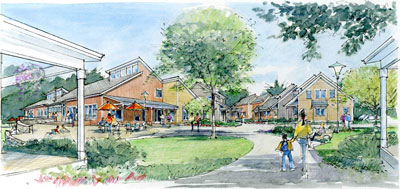
EcoVillages use the latest and best practices related to sustainable development and land planning principles, including dwelling units typically clustered to reduce development footprint, various forms of shared common facilities, low vehicle use, and emphasis on neighborhood. Projects (typically) include recycling of construction waste materials, green building techniques and use of sustainable materials, preservation of open space for perpetuity.

'via Blog this'

GEN Global Ecovillage Network Europe: Home

GEN Global Ecovillage Network Europe: Home:


'via Blog this'

Valle de Sensaciones - permaculture, green building, ecotecnology, creativity, music in an artistic ecovillage

Valle de Sensaciones - permaculture, green building, ecotecnology, creativity, music in an artistic ecovillage:


'via Blog this'

What's Wrong With Our Architecture?!


Documentary "First Earth-Uncompromising Ecological Architecture"

Permaculture Directory

Permaculture Directory:


'via Blog this'

A New "WE"

Monday, September 17, 2012

Malaysian Giant Freshwater Prawns (udang galah) industry

SRMM Aquaculture to pump in RM300m:
Malaysian Giant Freshwater Prawns (udang galah) industry


A GOOD eight years after labouring on research and development (R&D), the privately held SRMM Aquaculture Sdn Bhd is poised to pump in as much as RM300 million to help position itself as a major player in the Malaysian Giant Freshwater Prawns (udang galah) industry.

If SRMM can walk the talk, this will also help the country position itself as a leading player in the global industry.

Ironically, even though the industry is known as the Malaysian Giant Freshwater Prawns industry, Malaysia itself is not a major player on the global scale.

The industry got its name in the 1960's after a Malaysian scientist Dr Shao-Wen Ling, who was then based at the Marine Fisheries Institute in Penang, discovered how to raise baby prawns from the juvenile stage.

Shao was the first to complete the life cycle of the giant freshwater prawn (which scientific name is Macrobrachium rosenbergii).

"Since the discovery, many countries have applied Dr Shao's discovery and have developed their own giant freshwater prawn industry. However, there were no major developments for Malaysia in that area for some decades," SRMM's managing director Datuk Tony De Silva told Business Times in an interview.

Nevertheless, De Silva believes that Malaysia still has got what it takes to become a meaningful player in the fresh water giant prawn industry.

"No doubt, we have fallen behind, as the recent statistics show," said De Silva, pointing out that in 2007, Malaysia had only produced 246 tonnes of giant freshwater prawns.

On the converse, Taiwan, Bangladesh, India and Thailand were producing between 8,300 tonnes and 27,000 tonnes of processed giant freshwater prawns.

Processed prawns are mainly those that have been washed, sorted and peeled.

"Malaysia has yet to be able to produce these giant prawns commercially in a big way. However, SRMM has now perfected the entire process of producing it commercially. We believe we can help the country spearhead the development of the industry," he said.

The company commercially produces these prawns from its R&D centre in Kuantan. 

It currently produces about 30 tonnes to 50 tonnes of giant freshwater prawns a year over a 16.2ha site.

By middle of next year, it will expand its production facility by another 24.3ha - a move that could boost its production to more than 100 tonnes a year.

"We will be investing RM10 million for the expansion," said De Silva.

In addition, over the near to medium term, SRMM plans to invest another RM300 million to acquire and develop 202ha sites to produce these giant freshwater prawns.

"We will be in talks with several parties, such as government agencies, state government, as well as government-linked companies on various tie-up opportunities. We are also looking at smallholders like farmers to encourage them to rear these prawns using our technology and knowledge," he added.

"From the data that we have, there are thousands of hectares of abandoned or unused agriculture land. If a significant portion of these lands are used to produce udang galah, it will certainly bring positive impact to the economy," De Silva said.


Read more: SRMM Aquaculture to pump in RM300m http://www.btimes.com.my/Current_News/BTIMES/articles/udang/Article/#ixzz26iJKReFz